The broker is becoming the London market's operating system
A broker-led Lloyd's syndicate and an automated placement platform arrived in the same week. The broker is no longer just the middle of the market — it is the operating system, and the question is who owns the evidence in the chain.
What it is
Two announcements landed in the same week, and they are the same story wearing different clothes.
First, the rumour that became a row. Blackstone and Aon are reportedly discussing a Lloyd's syndicate, known for now as Cortina, that would take a 3% following line on Aon's catastrophe treaty placements and a 5% line on the rest of its treaty book, for three years, at roughly a 5% discount to the approved lead's terms. Blackstone's funds would supply the capital, roughly $500m at full take-up, and claims would be handled by a third party. No traditional insurer would sit anywhere in the middle.
Second, the product launch that barely made a ripple by comparison. Marsh's Broker WorkBench puts the firm's data and analytics at the centre of the placement process, automates the routine administration, and aims to cut the industry's two-to-four-week placement time to days or hours, with every recommendation still approved by a human broker.
Add Gallagher's confirmation that it is building its own route from broking, captives and ILS into "capital market hands", and the pattern is clear. The broker is no longer just the intermediary between client and carrier. It is becoming the operating system: the platform through which risk is structured, placed and, increasingly, funded.
Why it matters now
The timing is not accidental. Lloyd's 2025 annual report showed a market expense ratio of 35.6%, up from 34.4% a year earlier, and by the half year it had climbed again, to 36.4%. Prices, meanwhile, are falling: Fitch's Monte Carlo survey found 60% of reinsurers expect property catastrophe pricing to decline further in 2027. A market with rising costs and falling prices is a market where the middle is under attack from both ends. The client wants speed; the capital wants a shorter route. The broker now has the means to serve both, and the incentive to bypass everyone else.
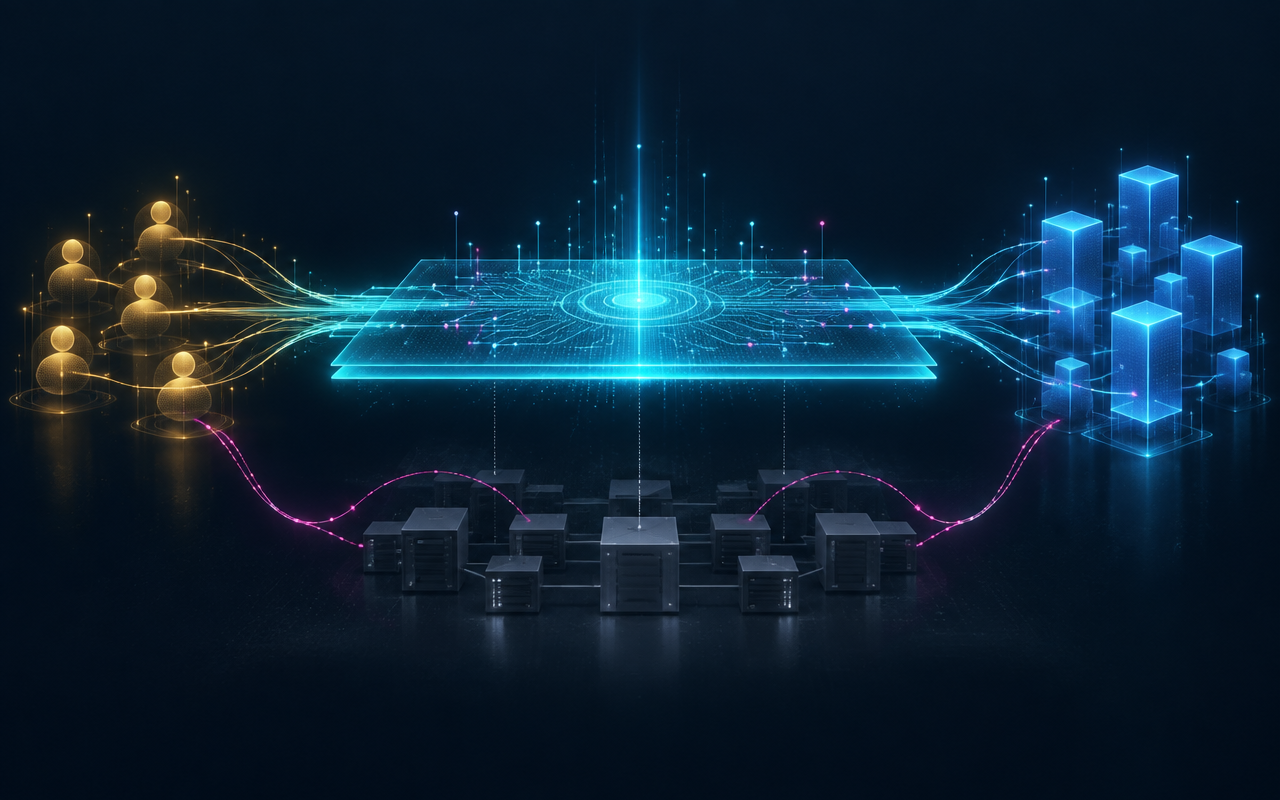
The structural numbers say this is not a fringe experiment. Coverholders account for around 40% of Lloyd's gross written premium. Facilities and structured solutions are about 3% of the portfolio and growing at roughly 56% a year. Alternative capital is heading for a record $130bn. Every one of those trends redraws the same diagram: who vets the risk, who prices it, who holds the capital, who handles the claim, and who owns the evidence in between.
The objections to Cortina are real, and most of them are governance objections wearing commercial hats. Does a broker directing its own clients' premium toward a capital provider it has a commercial relationship with sit comfortably against the arm's-length role brokers are meant to play? Is private capital durable when the losses come, or does it follow the historical pattern of arriving in the good years and leaving in the bad? Those are exactly the questions an operating model is supposed to answer, and currently, in most of the market, they are answerable only by reputation.
What firms should do
Brokers: run delegated authority like an underwriting operation, not an administration
A facility is a set of processes: risk selection, pricing benchmarks, binder governance, claims oversight, reporting to the carriers whose paper stands behind it. Every one of those processes needs an owner, a system and an evidence trail. The broker that can demonstrate its facility governance will win carrier trust and Lloyd's approval faster than the one that cannot.
Carriers: decide, and say, which steps are yours
The market is publicly testing which functions still require an insurer. The honest answer is that underwriting judgement, the claims chain and the paper still do, for now. Make that role legible: the carrier's defence against disintermediation is the demonstrated quality of its underwriting and claims operations, not the size of its balance sheet.
Capital providers: treat the operating model as part of the investment thesis
The durability question is not answered by a speech. It is answered by a claims operation, a data architecture and a governance structure that can survive a bad year. Funds that arrive with capital and no machinery are buying a cycle, not a business.
Everyone: map the delegation chain before the regulator asks
The FCA's Consumer Duty consultation and the IUA's response this week show the shape of things to come: regulators want firms to rely on each other's work, but nobody will rely on work that carries no evidence. Fair value assessments get duplicated today because the chain cannot show its workings. That duplication is pure cost, and it is exactly the cost the market's new structures are supposed to remove.
The opmodal perspective
Distribution is an operating model. It is a chain of owned, connected, evidenced steps, and the market's current upheaval is a repricing of those steps. When a facility, a platform or a fund rearranges the chain, it is not abstract market structure. It is process ownership changing hands, and every handoff carries an evidence obligation that most firms have not yet designed for.
This is the quiet season's second lesson, after exposure. In a soft market, the tail risk gets re-quantified and the cost structure gets exposed. The firms that built the exposure chain will walk into the coming-into-line conversations with evidence. The firms that map the distribution chain will walk into the facility conversation with the same advantage. The firms that wait will find the conversation has moved on, and that the broker, the fund and the platform have decided who owns what without them.
Cortina may never exist. The question it poses already does: in the chain between client and capital, which steps are yours, and can you prove it? For most of the market right now, the honest answer is: we know who does the work. We are less sure about who owns the evidence.
That is the operating model question underneath the firestorm.
Keep reading: The importance of understanding process ownership in change initiatives, and What the next Miami hurricane will encounter.