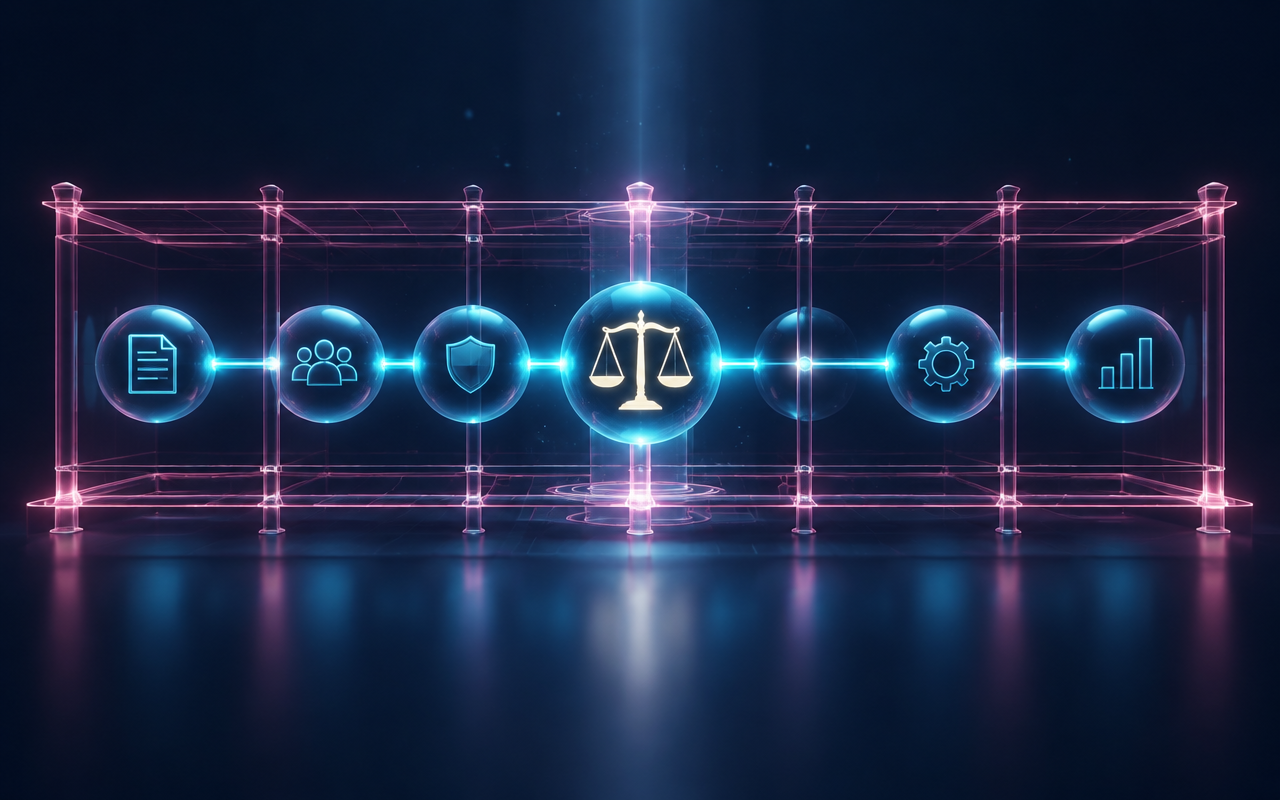
When the machine inherits the controls
Agents in production are inheriting the same entitlements, rules and audit trails as human users. The machine does not sit beside the operating model. It runs inside it.
What it is
For two years, the industry has been asking one question about AI in operations: what happens to oversight when the machine does the work. This month produced the first complete answer, and it is a design decision, not a technology one.
The answer is visible in three announcements that landed within weeks of each other. OMBA Advisory & Investments has been running FINBOURNE agents in production for six months across its daily investment operations, portfolio reconciliations, performance review, valuations, data quality control, with the operational burden down at least 20 per cent. The agents "call the same APIs and inherit the same entitlements that govern human users, with every call logged for audit and regulatory review." Caruso, the AI-native private markets administrator, has launched in the United States, where its agents process applications, redemptions and compliance tasks "under each manager's own rules and governing documents, and anything outside those rules is escalated to a person for review." And Gresham's Control Studio, launched at the start of the month, completes the pattern: business users describe controls in plain language, the AI writes the configuration, and a deterministic engine enforces it.
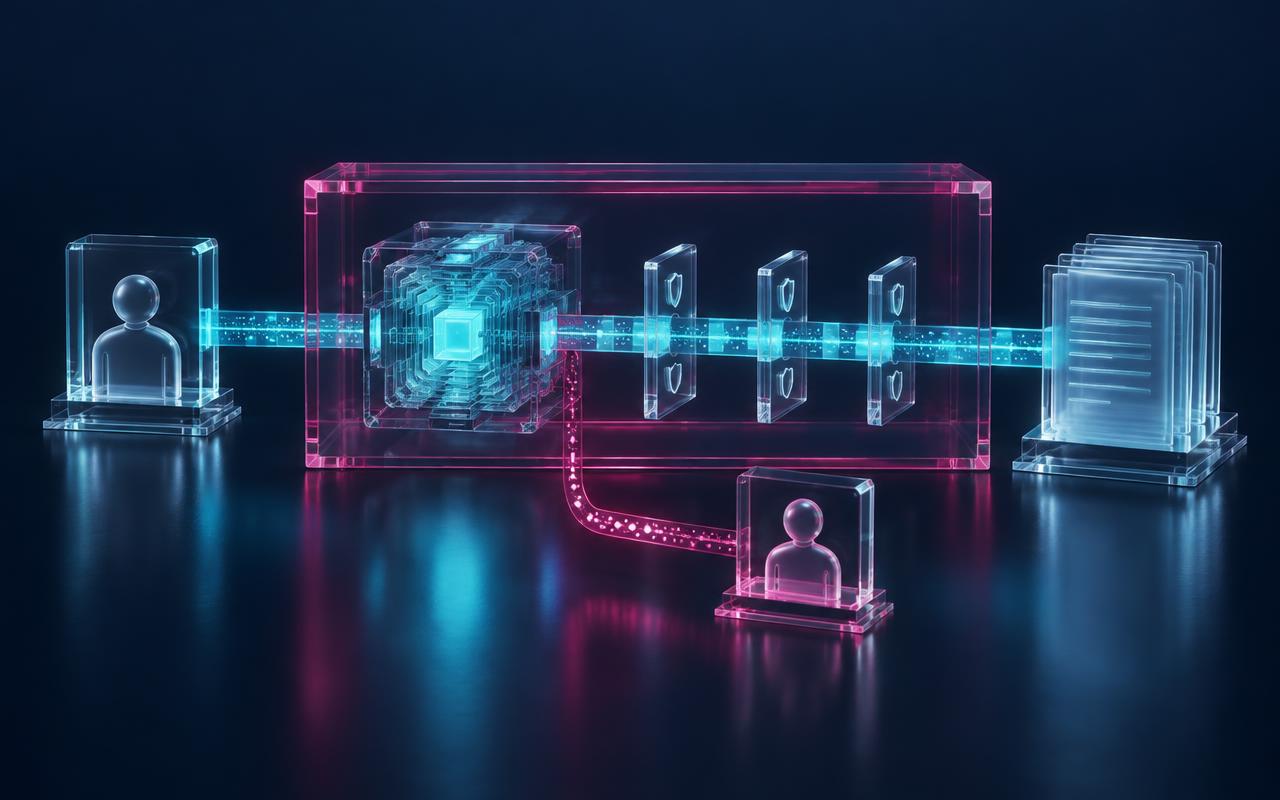
Three different firms, three different functions, one architecture. The agent is not given its own permission system, its own data copies, its own shadow governance. It inherits the controls that already exist, and the audit trail records its actions exactly as it records a person's. The machine does not sit beside the operating model. It runs inside it.
Why it matters now
Three things have changed.
First, the production evidence has arrived. A run of pilots could be dismissed as theatre; a six-month production run across the daily cycle, with a measured burden reduction, cannot. OMBA is one of seven clients FINBOURNE says are now running AI in production, with more than 30 agents available out of the box. The question has moved from "does it work" to "how do we govern it", which is a much more serious question.
Second, the commercial pressure is arriving from the supply side. Caruso's US launch carries the numbers: more than $75 billion under administration, nearly quadrupled in a year. Its pitch rests on a finding from CSC's survey of limited partners: 68 per cent say being able to see clearly into a manager's operations matters more to them than its past returns, and 85 per cent have walked away from an investment over operational concerns alone. When investors start pricing operational transparency, the administrator that can show its work in real time wins the mandate, and the managers it serves inherit the expectation.
Third, the regulators are converging on the same answer from the other direction. The Central Bank of Ireland's delegation review expects every fund management company to evidence its oversight of delegates by year end. ESMA's T+1 framework puts its first deadline on allocations and confirmations, the handover points, not the settlement engine. Operational resilience rules have always demanded that firms know their important business services and the people, processes and systems behind them. An agent that runs under inherited entitlements and a complete audit trail answers all three regimes at once. One that runs on a shadow stack answers none.
What firms should do
First, write the rulebook before you deploy the agent. The escalation boundary is the design artefact: what the agent may process, what it must escalate, and who owns the rules it runs under. Caruso's formulation, each manager's own rules and governing documents, everything else escalated to a person, is the template, and it should be written down and signed off like any other procedure.
Second, insist on inheritance. Every agent action should flow through the same entitlements, the same approval flows and the same logging as a human in the same role. If the agent cannot run under the controls you already have, fix the controls first. A separate permission system for AI is a second operating model, and it is the one nobody draws.
Third, redesign the oversight roles. When the agent runs the cycle, the human value concentrates in rule ownership, exception judgement and the seams between components. Teams still doing assembly work against an agentic processor are in the least defensible position in the firm. The job descriptions need redrafting, and the redrafting should happen before the deployment, not after the first exception.
The opmodal perspective
This is what the Architecture Canvas methodology was built for. Drawn honestly, the model shows the agent as a component like any other: the interfaces it consumes, the entitlements it holds, the owner of its rules, the failure mode when it escalates, and the human who receives the escalation. A firm whose model can show that can adopt each new agent as an upgrade to a component it already understands. A firm whose model cannot will bolt the agent on and discover the seams at the first audit.
The methodology's ninth principle applies with unusual force: sign-off is the beginning, not the end. The rules an agent inherits are procedures like any other, and they need owners, reviews and re-certification. The difference is that when a human procedure drifts, the drift is invisible until someone notices. When an agent's rulebook drifts, the drift is in the audit trail. The firms that re-certify their agent rulebooks the way they re-certify their processes will be the ones whose machines stay governed.
The quiet truth of this month's announcements is that the middle office is not being automated away. It is being automated into the model. The firms that inherit the controls rather than bolt them on will find agentic operations is the same operating model with a faster processor. The firms that do not will find they have two models to govern, and the second one nobody drew.
Keep reading
Process ownership: the discipline that keeps operating models alive
The business blueprint: one connected picture of how your organisation works