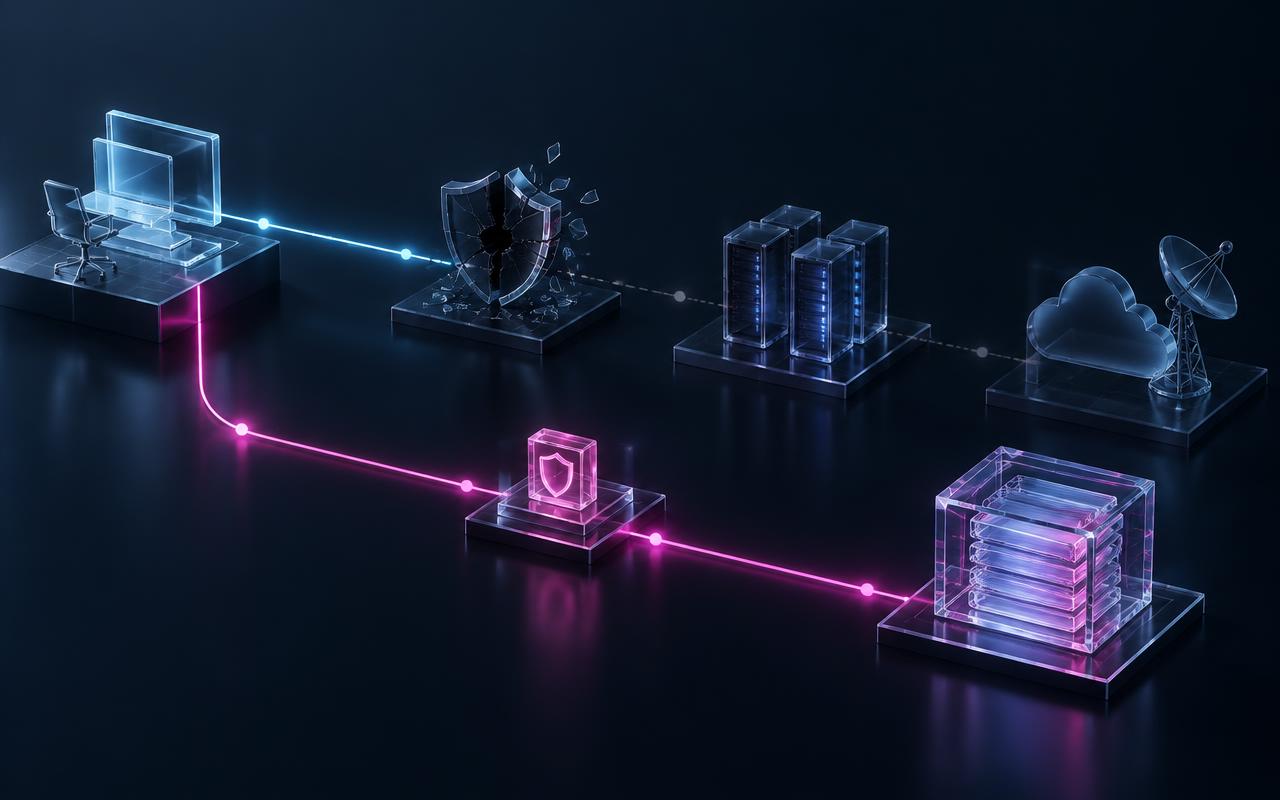
The evidence layer
Regulators, investors and boards are converging on the same demand: show me. The evidence layer turns operating-model claims into proof generated by the work itself.

What it is
Every operating model is a set of claims: the NAV is right, the trade settled, the control operated, the process ran as drawn. For most of the industry's history those claims were carried by the people who made them, and checking them was a craft. The evidence layer is what happens when the claims stop being carried by people and start being demanded by others: regulators, investors, boards, each with their own questionnaire and their own standard of proof.
Three demands landed in a single week this November, and together they describe the layer. On Tuesday, CSC's Future Private Capital CFO 2026 study, covering more than 300 GPs and 200 LPs across North America, Europe, the UK and Asia Pacific, found 88 per cent of GPs said their finance and operations teams spend between 11 and 50 per cent of their time validating, reconciling or recreating administrator outputs. On Wednesday, the FCA published its year-two review of operational resilience self-assessments and told firms to demonstrate what they can deliver now during severe but plausible disruption, rather than relying on planned remediation, transformation programmes or future investment. And the same CSC study found 59 per cent of LPs want a documented AI and data governance framework shared during due diligence, with transparency on data sources and lineage, independent model validation or audit reports, and evidence of human review and override.
Three different audiences, one demand: show me, in my format, with your name on it.
Why it matters now
Because the cost of absent evidence has become measurable, and it is being paid twice.
The first payment is inside the firm. CSC's headline number, 88 per cent of finance and operations teams spending between 11 and 50 per cent of their time re-deriving administrator outputs, is a tax on absent trust. The processing was outsourced. The confidence in the output was not, because the output does not arrive with evidence that meets the manager's own standard, so the team recreates it. As firms add asset classes, structures, jurisdictions and reporting requirements, the study finds, complexity is absorbed through manual review, parallel records and exception management rather than removed from the operating model. Meanwhile seven in ten GPs plan to outsource more, and 97 per cent of LPs expect outsourcing to grow, so the flow of work out the door and the flow of rework back in are both accelerating. Citco's Q3 middle office figures show the same traffic from the provider side: collateral trades up 19 per cent quarter on quarter, treasury clients up 70 per cent on 2023, trade operations volumes up more than 200 per cent.
The second payment is now being extracted by the people who write the cheques. In the CSC study, 74 per cent of LPs say IT systems and cybersecurity are important to operational due diligence, but only 14 per cent of GPs describe their cyber and operational resilience as very robust. Limited partners are no longer satisfied with policies and headcount. They want a documented AI and data governance framework, lineage, independent validation and evidence of human review, and they are writing those requirements into due diligence. The firm that cannot produce the evidence does not lose an argument. It loses a mandate, or prices it.
And the regulator has moved in the same direction, on the same week. The FCA's year-two findings are the first sustained regulator statement that plans are not proof: a firm must show what it can deliver now, tested against impact tolerances, in a self-assessment that survives scrutiny. The resilience rulebook and the LP questionnaire are converging on the same artefact.
What firms should do
First, define the evidence standard per process. For each critical process, write down what proves it ran correctly last month: the report, the sign-off, the reconciliation, the data lineage. This sounds like paperwork until you realise the alternatives. Every external demand, the self-assessment, the ODD pack, the audit, currently triggers a bespoke evidence-gathering exercise, which is exactly the rework CSC measured. Naming the evidence per process turns re-creation into retrieval.
Second, buy oversight by exception, not revalidation. With every administrator, custodian and outsourcer, agree data standards and tolerance thresholds at the contract, then verify the exceptions rather than recreating the whole ledger. The counter-example is instructive: TIFF's consolidated partnership with Ultimus runs public and private fund operations and the management company on shared processes under one administrator, and TIFF's chief operating officer describes the result as a team that "spends less time reconciling information and more time on the work that matters." One interface, one data model, one thing to verify. The discipline gets harder with multiple administrators, where every added provider adds an interface, a standard and a reconciliation, and the oversight function, not the administrator, becomes the real back office.
Third, generate the evidence as a by-product of running. The FCA self-assessment, the LP's due diligence pack and the monthly operations report should all read off the same drawn model, with the same owners and the same re-certification dates. If evidence is assembled separately for each audience, the firm is running three operating models, and the tax is permanent.
The opmodal perspective
This is the discipline the Architecture Canvas methodology exists for, because a drawn model is already half the evidence layer. Every process on the canvas carries its owner, its seams, its sign-off and its re-certification date. The evidence the regulator, the investor and the board are asking for is, in most firms, already sitting in the model, unassembled. The methodology's ninth principle applies with unusual force here: sign-off is the beginning, not the end. Evidence decays at the same rate as the model it describes, which is why re-certification cycles exist, and why a firm whose model is drawn and current can answer the FCA, the LP and the audit from the same source while everyone else runs three separate exercises.
The verification tax, the LP's governance demands and the regulator's resilience findings are not three problems. They are one problem wearing three costumes: the operating model's claims are no longer trusted on the say-so of the people who run it. The firms that build the evidence layer, process by process, owner by owner, will find the tax was a design problem all along. The rest will keep paying twice: once to the administrator, and once to their own team, in hours spent proving what the model should have proved for them.
Keep reading
Process ownership: the discipline that keeps operating models alive
The business blueprint: one connected picture of how your organisation works